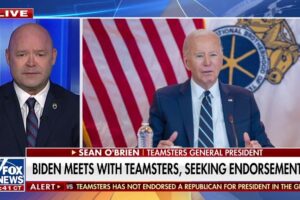
It is true that O’Brien’s two meetings with Trump and the Teamsters’ contribution to the GOP don’t constitute a formal endorsement. The question is: what kind of message does it send?
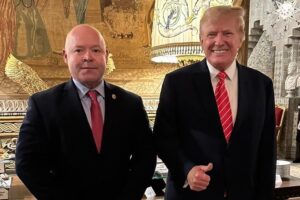
It is true that O’Brien’s two meetings with Trump and the Teamsters’ contribution to the GOP don’t constitute a formal endorsement. The question is: what kind of message does it send?
Last fall, a Gallup Poll reported that 63 percent of U.S. adults said a third party was needed because the major parties do such a “poor job of representing the American people.” While this was the highest level of support for a third party that Gallup found in the 20 years it has conducted the survey, support for a third party has remained at roughly that level since 2013.
We should vigorously argue for class independence and for a labor party. But it does mean that we should recognize that we are working in a labor movement where most activists disagree with us. It would be better if it wasn’t that way, but it’s where things stand today.

Even though major business organizations issued statements condemning January 6 and worked with major media and non-governmental organizations to assure a “peaceful transition” from Trump to Biden, it was always a farrago to trust big business to champion democracy. As always with U.S. politics, following the money is the best way to understand what happened.

The crisis in the Teamster leadership threatens to overwhelm recent strike victory strikes at DHL and US Foods, as well as a local organizing campaign in Virginia at Costco. Future projects like organizing Amazon have already stagnated.
Get ready for an ugly and interminable election season. As of right now, polls showed that Biden and Trump are essential tied with support in the low-to-mid 40s nationally. But because of the ridiculous and undemocratic Electoral College, the election will come down to how each fare in a small number of “swing states,” where the electorate is more closely divided between the candidates and their parties.

For years now, the big majority of strikes occur when the old contract expires. No major national contracts have expired since November, so there simply have not been opportunities for new strikes. However, a number of major contracts are due to expire this year.

As the US presidential election begins to gather steam, Joe Allen looks at the far right threat and the dangerous game being played by the Democrats. Allen asks if Genocide Joe has the support to win or whether a new left alternative should take their place instead.

Chicago represents a test case for how a “sanctuary” city can welcome an influx of migrants, when as many as 2.4 million asylum seekers have crossed the southern border in the last year. Hundreds of migrants arrive weekly on buses dispatched by the right-wing governors of Texas and Florida.

As U.S officials laud an “elder statesman” and “erudite strategist,” the rest of us, and surely millions of brown-skinned people, celebrate the end of an “iconic napalm rights advocate” whose lies, hubris, towering inhumanity and many blood-soaked foreign policy follies left a legacy – in Vietnam, Chile, Cambodia, Argentina – of an “enormous pile of corpses” that may number four million.

Corporate leaders have undoubtedly been keeping a close watch on the rise in working-class combativity in recent months, and they will be devising their own strategies to contest any shift in the balance of class forces that has suited them so well in the previous decades.

Fain expressed his hope that the union’s victory will be, “a turning point in the class war that’s been raging in this country for the past 40 years.” The contracts are consciously timed to expire on April 30, 2028. This means that the next strike could be on May Day, the international day of workers solidarity. All this is new ground in the American labor movement.

The union leadership has called for the Ford workers to return to work as quickly as possible. The picket lines are down. It will take a little time for the skilled trades to get the line and machinery up and running again. But the union has called for a prompt return to work.
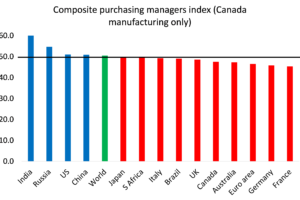
Changes in business investment have always been an indicator of future growth in output and employment – not vice versa, as Keynesians argue. And in Q3, business investment came to a standstill. In previous quarters it was investment in new structures (offices, manufacturing plants etc) that kept business investment contributing about 1% pt to quarterly growth. But in Q3 that has evaporated.

On October 17, the United Auto Workers’ strike passed its thirty-third day. There are three new points that should be focused on. They are the decision to strike Kentucky Truck, Bill Ford’s attempt to do an end-run around the union leadership, and the mounting repercussions of the strike.