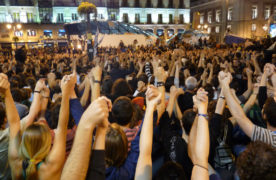




Anger against the system exploded onto the streets. The fires and barricades could signal the end of this political regime if the movement keeps growing.











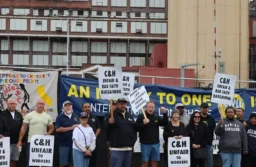








Anger against the system exploded onto the streets. The fires and barricades could signal the end of this political regime if the movement keeps growing.

On Friday, 2 October 2026, the first result of the event that has shaken politics in the Spanish state was staged, with the vote in Congress of the two Decrees that the government had launched to try to respond to the housing movement. Both texts were negotiated in a hurry and represented the attempt of the ruling PSOE party and its allies to make a final move in order to survive the cycle that, inevitably, will open from the next few weeks.

Even though DSA, Jacobin, CWCP and the rest aren’t in practice committed to a fundamental goal of 19th century social democracy—that is, building a social democratic or labor party—they operate on a theory of working-class politics and consciousness very much in line with their social democratic forebears.

Recalling Trump’s infamous meeting with major oil companies to discuss Venezuela on January 9 of this year, the strategy to allay their concerns and guarantee long-term investments becomes clearer: to entrench and secure the mortgage of an entire country for decades to come. Only in this way could that guarantee of stable, reliable, and cheap energy eventually materialize in times of “emergencies” and geopolitical confrontation.

AI doomsday predictions are not new—they have been discussed in tech circles for decades and entered the public domain with the launch of ChatGPT nearly four years ago. But the recent warning cut through in a way others haven’t, partly because it coincides with growing hostility to AI and the companies producing it, and partly because anxieties are rising about the pace of AI’s development.

Democrats have pledged to “hold ICE accountable” if they attain a majority in one or both houses of Congress in November. But they have pointedly refused to say they have any plans to “abolish,” or restructure ICE. House Majority Leader (and presumed future House Speaker) Hakeem Jeffries has announced a Democratic agenda that focuses on restoring the administration’s cuts to Medicaid and to the Affordable Care Act.

It is quite likely that significant external pressure will be applied on Die Linke to form some sort of broad coalition to prevent the AfD from being in power. This would be somewhat similar to the popular front approach we saw in Spain in the 1930’s. While it is imperative to prevent the AfD from governing, Die Linke would be better off refraining from being part in such a coalition, precisely in order to shed the image of being just another Altpartei. That is the dilemma.

The US is now trying to squeeze Iran with still harsher economic sanctions. These, together with the bombing and the blockade of its oil exports, are having an effect. But Tehran will not easily succumb to pressure.

The balance sheet for the “socialist” wave won’t be known until November. But there is a good chance that DSA members could add Los Angeles and Washington, DC to New York on the roster of U.S. cities with “democratic socialist” mayors. Democratic primary victories in New York, Philadelphia and Denver could add three to four more DSA members to Congress. And DSA-adjacent progressives like Michigan senate candidate Abdul El-Sayed could boost liberal Democrats in the next U.S. Congress.
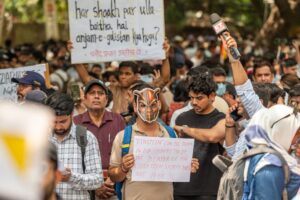
Although the movement initially called only for administrative changes and the removal of Pradhan, it broadened to demand the release of detained protesters and the removal of Modi himself, a wide range of anti-Modi chants being taken up by protesters on the streets of Delhi. Like other uprisings over the last few years, slogans to do with the liberation of Palestine and opposing the government’s ties to Israel were raised by the left of the movement. Then, on 20 July, the movement really took off.
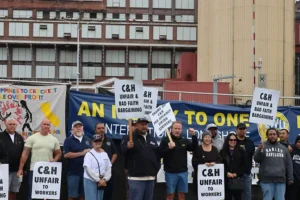
Sugar is a heavily subsidized industry that has made the Fanjuls billionaires with an estimated worth of $4billion. They are personal friends of President Donald Trump and live near his Mar-a-lago estate.
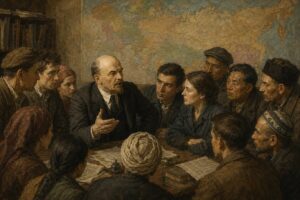
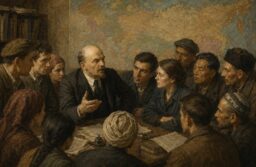
For Lenin, the right of nations to self-determination was one of the fundamental tasks of the socialist revolution, and he regarded its denial as a betrayal of socialism. But the aim of the socialist revolution is not merely to resolve the national question; rather, it is to annihilate the very foundations of all forms of oppression and exploitation. Therefore, like Marx and Engels, Lenin viewed every democratic question—including the national question—within its historical context, and adopted a position based on the historical interests of the working class.
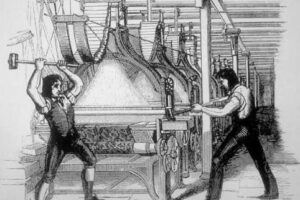
In the early 19th century at the start of the industrial revolution in Britain, a group of skilled weavers tried to resist the introduction of machine weaving in the early 19th century by various means, including sabotaging and wrecking the machines. They were called Luddites. Now it seems that a form of Luddism has returned over AI. Just as the Luddites had a case about protecting their livelihoods, so do Gen Z workers now.

“We are still in emergency mode. We are simply trying to enhance our people’s resilience and preserve their dignity. Gaza’s future remains uncertain. Everything we are doing is an emergency measure. We cannot address the root cause. All we can do is take a humanitarian approach to keep people from falling into the abyss.”
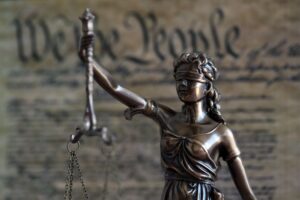
Throughout U.S. history, conservative and reactionary forces have taken advantage of the perfectly legal ways that the Constitution allows political minorities to veto or derail the popular will. That was how the Jim Crow Democrats maintained their control over the South and the federal government for a century. It’s how the loser of the popular vote became president five times, including twice in the last quarter century.