The reality is that there is no evidence, no serious reason, to believe that Kamala Harris will have a better or different approach to Palestine than Joe Biden. Fortunately, large sections of the movement understand this very clearly.
Throughout US history, the only way democratic rights have been expanded is through mass struggle—from the Civil War to the labor upsurge of the 1930s; from the Civil Rights movement to the fight for marriage equality—and it’s the only way they can be won today.
The Republicans are the right-wing party akin to the Liberals or the Nationals, and the Democrats are the “center-left” party like the Labor Party. While this is a quick way of sorting out the two main parties in the US bipartisan system, it doesn’t adequately account for what is unique about the Democrats in the taxonomy of political parties across the democratic world.
Harris’ rhetoric has tended to be more progressive than Biden’s, but Biden’s policies are very likely to be Harris’ policies in a future presidency because Harris has never strayed far from them—whatever language she has used.
The country was built on the violence of chattel slavery, the extermination of the native population, and wars of conquest. It fought a bloody civil war that killed the equivalent of seven million people, in today’s population.
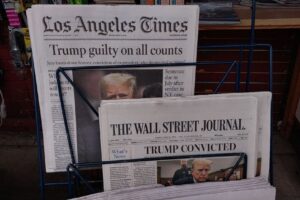
It may not be apparent now, but it’s hard to see how Trump’s status as a serial predator, fraudster and, now convicted felon, is a benefit to him. And if the November election proves to be as close as all analysts are expecting right now, even a small defection from or deflation of Trump’s support base could doom him.
Biden’s order “would shut down asylum requests to the U.S.-Mexico border once the number of daily encounters hits 2,500 between ports of entry, with the border reopening once that number declines to 1,500,” according to The Associated Press—and various other media outlets that also cited unnamed officials who cautioned that the final figures could still change.
If we look at the migrant crisis from outside the realm of grubby electoral politics, we see that the current crisis is the product of decades of U.S. imperialism and domestic political dysfunction. Decades of neoliberal economic “reform” have helped to destroy whole sectors of the Central American economies. U.S.-backed “drug wars” in Central America and Colombia have also contributed to flows of migrants fleeing paramilitaries. The U.S. and other imperialist powers have meddled in Haitian affairs for centuries. And U.S. economic sanctions against Cuba and Venezuela have made life unsustainable for millions in those countries.
The class bias of the system begins with who the police target: police are far less likely to arrest higher-income people for committing the same crimes as poor people, and far more likely to charge a poor person than a well-off person for the same offense. Swat teams aren’t barging into wealthy neighborhoods and arresting teenagers holding drug-addled parties while their parents are on vacation at the second home in Cabo.
There is no indication as yet that pro-Palestinian students will retreat in the aftermath of the repression they have faced—especially as Israeli genocide continues. Repression against dissent can sometimes shut it down, but it also can backfire, by radicalizing students as it did in the 1960s—by exposing the hypocrisy of U.S. rulers who claim to support free speech yet forcibly shut down those who challenge its imperial interests.
The main point to understand is that contract expirations are when the vast majority of strikes take place. If no contracts happen to expire during a particular time period, it’s pretty unlikely that many strikes will take place. It’s therefore important to look at upcoming contract expirations when attempting to chart the possible future course of the class struggle.
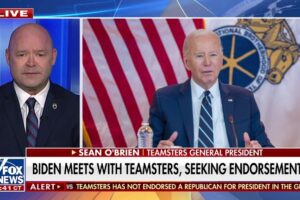
It is true that O’Brien’s two meetings with Trump and the Teamsters’ contribution to the GOP don’t constitute a formal endorsement. The question is: what kind of message does it send?
Last fall, a Gallup Poll reported that 63 percent of U.S. adults said a third party was needed because the major parties do such a “poor job of representing the American people.” While this was the highest level of support for a third party that Gallup found in the 20 years it has conducted the survey, support for a third party has remained at roughly that level since 2013.
We should vigorously argue for class independence and for a labor party. But it does mean that we should recognize that we are working in a labor movement where most activists disagree with us. It would be better if it wasn’t that way, but it’s where things stand today.
Even though major business organizations issued statements condemning January 6 and worked with major media and non-governmental organizations to assure a “peaceful transition” from Trump to Biden, it was always a farrago to trust big business to champion democracy. As always with U.S. politics, following the money is the best way to understand what happened.