The United States has grown wary of long-term occupations. Abandoning the pretense of exporting democracy, the Trump administration has chosen to force existing powers to comply with its rule.
For all the liberal tribute paid to the sacrifices of civil rights activists in the 1960s, liberal and Democratic Party leaders have seemed strangely subdued in their reaction to the Supreme Court’s tearing the heart out of the VRA. The solution Democrats offer is to more aggressively gerrymander “blue” states to maintain Democratic parity with the Republicans. Even Black politicians who may find themselves out of office after Republican gerrymanders eliminate their seats have not issued calls for mass opposition to this rights rollback.
At its core, this is a crisis of the existing social order—one that is not temporary or accidental, but historical and structural in nature, and which manifests itself across all spheres, including the economy and politics. Figures such as Donald Trump are not the cause of this crisis, but rather its symptoms.
Though the resolution on the D9 bulldozers failed by a vote of 59 to 40, it was notable the large number of Democratic Senators that voted for it, nearly 80% of them. Yet, the crucial seven votes that killed it also came from the Democratic side of the aisle.
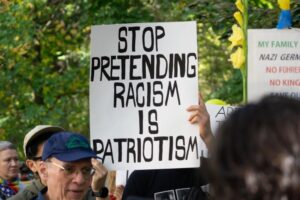
If some of the largest manifestations of opposition to Trump don’t clearly foreground antiwar or anti-imperial messages, it’s because the political presence of a left that raises those demands is weaker than at any time since those politics won a mass hearing during the Vietnam War.
The fact is that Donald Trump’s style in world politics looks very much like a mafioso’s conduct on the global arena. Here are some of the Mafia methods applied by Don Trump on the world scene…
The idea that the Democratic Party is the place for leftists didn’t originate with Jackson. But his campaigns provided an entry point for the 1960s/1970s generation of radicals and revolutionaries to be reconciled with mainstream U.S. politics.
Imperialist nations have always been divided into classes, pitting workers and their capitalist rulers into an antagonistic relationship: one class can only gain at the other’s expense. This is the objective reality, which doesn’t change over time.
The Trump administration is betting that overwhelming military pressure, combined with the elimination of several leaders—including the head of state—will tip the balance in favor of pragmatic, non-ideological “moderates”.
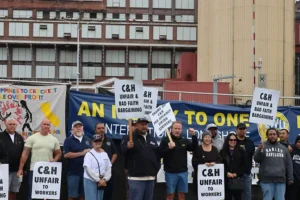
Workers in Texas suffer under this crushing weight coming at them from all sides because of Abbott. Oxfam America’s “The Best States to Work In The US 2025” reported that Texas is 45th out of 50 U.S. states in wage policies, worker protections, right to organize and the minimum wage, which is still $7.25 per hour. It mirrors the federal minimum wage of $7.25 per hour that’s been frozen since 2009.
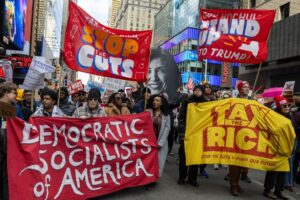
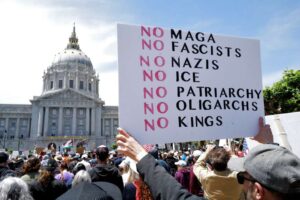
Politics are fluid, and maybe the Democrats will sell out for a higher price. But their entire trajectory—from last year’s MAGA-lite to this year’s reluctant obstructionists—should disabuse anyone of the notion that they are true allies in the fight against ICE and Trump.
The sense of solidarity in Minneapolis has spread across the country like wildfire since the deaths of Good and Pretti—with protests and student walkouts and that number from the dozens to the thousands in cities, large and small.
The broad array of trade unions, community and immigrant rights groups supporting the day of action is breathtaking and points to how deep the hatred of ICE and the Border patrol runs in Minnesota, right now.
Despite the defensive nature of Trump’s plans for the Americas, the current campaign of murder on the high seas and saber-rattling against long-time U.S. ally Denmark to pressure it will give up Greenland, should be warnings that the U.S. will do a lot of damage along the way.
Rising inflation is one thing. But it is being accompanied by a weakening jobs market as employment growth slows to a trickle and wage rises, especially for the lower paid, have slowed. Unemployment among Hispanic workers — who swung significantly towards Trump last November — rose to a year-high of 5.5 per cent in September, compared with 4.4 per cent overall.