Keeping fighting, creating the conditions allowing for the construction of a movement for a general strike that would unite public and private workers, here is what’s on the table.
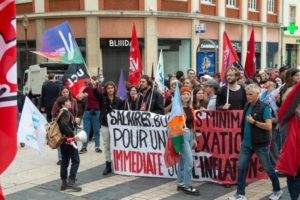
Keeping fighting, creating the conditions allowing for the construction of a movement for a general strike that would unite public and private workers, here is what’s on the table.
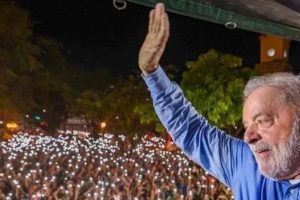
This brief note on the current situation in the lead-up to the October 30 Brazilian elections is written by the socialist Valerio Arcary, a member of Resistencia, a current inside the Party of Socialism and Freedom (PSOL).

With four prime ministers in six years and four chancellors of the Exchequer (treasurers) in four months, a massive polling deficit against Labour and the party’s business backers in open revolt, the Conservatives are in crisis.
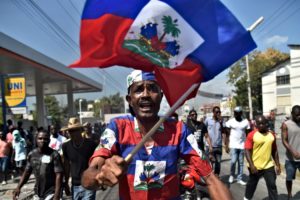
We publish a translation of a report by Jackson Jean from Haiti, where a social crisis is fueling a clamor from the Haitian elite and from the “international community” for another invasion of the country.
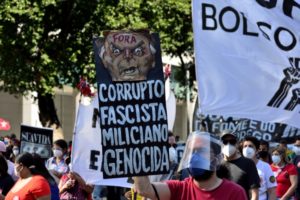
In this article, originally published in the Uruguayan newspaper Brecha, and republished in Correspondencia de Prensa, the Uruguayan socialist journalist Raúl Zibechi argues that Bolsonaro’s strong second-place finish in the recent Brazilian presidential election showed that the far right is deeply rooted in Brazilian society, even if it may not defeat Lula in the October 30 presidential runoff.

Brazil’s dominant classes have never had a great fondness for democracy. Inheritors of three centuries of European colonization and four centuries of slavery, they have shown, in the last hundred years, a strong propensity for an authoritarian state…
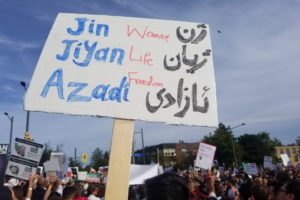
As protests in Iran continue and deepen, Iranian activist Gh. H. Saedi looks at the potential of the struggle and argues for greater solidarity from the left in Britain.

The main lesson from the results of the first round is this: to defeat Bolsonaro electorally on October 30, it will be necessary for the people in the streets, with Lula, to transform the current electoral majority into a wave of popular support…

The capitalists realize that in a crisis-ridden and polarized world, far-right governments may increasingly be an option for defending their power and privilege. They think that they are playing a clever game by normalizing the new government in Italy.

The theses propose tasks for the Brazilian left in the likely event that Bolsonaro won’t accept defeat, and at time when the constitutionally designated election authorities have allowed the military to conduct its own audit of the vote.

Women were at the forefront of the first protests, cutting their hair and burning their headscarves in public in defiance of the hijab law. Unlike the individual initiatives of 2017-2018, this time removing one’s headscarf is done collectively, leading to a direct confrontation with the authorities.

Congress had earlier passed a law forbidding the colony to declare bankruptcy, which states and cities in the U.S. can do. So even though Puerto Rico was bankrupt, it could not declare bankruptcy.

The enforcement of the hijab and, by extension, guardianship over women’s bodies and minds, are not exclusive to Iran. They manifest in different forms and degrees in many countries.
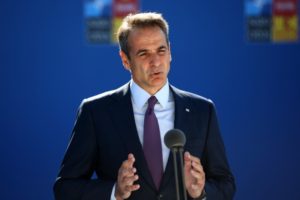
Facing a rough winter, the crucial question is whether the working-class movement and the youth will find the strength for their own independent massive intervention from bellow.
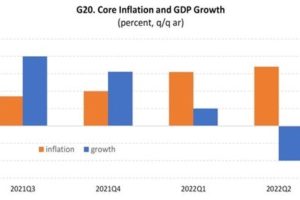
The G7 has agreed to stop buying Russian oil, as part of its programme of using economics sanctions as a war weapon. But up to now, energy imports from Russia have not been stopped because it would mean a catastrophe for the EU countries, particularly Germany.