The Trump administration is preparing the largest deployment of U.S. warships to the Caribbean Sea since the 1962 Cuban missile crisis —including the world’s largest aircraft carrier. At the time of writing in early December, it appeared that the U.S. military was readying a strike on Venezuela. After months of a lawless campaign of murder of supposed “drug traffickers” in boats off the country’s coast, the U.S. is threatening to launch an assault in the Venezuelan interior.
The administration has made little secret of its aim to destabilize Venezuela. Earlier in November, Trump signed off on a plan of CIA covert operations inside the country, the New York Times reported. At the same time, the Times showed, the administration had opened a backchannel to Venezuelan President Nicolas Maduro. The administration and Maduro were discussing a plan by which Maduro would step down from the presidency in favor of elections to choose his successor.
Already a chorus for “regime change” in Venezuela is gathering voices in the foreign policy establishment. Reagan era war criminal Elliot Abrams wrote “How to Topple Maduro: And Why Regime Change Is the Only Way Forward in Venezuela” in the establishment journal Foreign Affairs. Abrams’ screed brought a response from the International Crisis Group’s Phil Gunson on “The Peril of Ousting Maduro,” arguing for a gradual transition to a post-Maduro Venezuela. These debates on “regime change” illustrate yet again how little the U.S. ruling class has absorbed the lessons of its defeats in Iraq and Afghanistan (not to mention Vietnam).
Key to the argument for Abrams-style regime change is the hope that the Venezuelan opposition would unite behind a figure like Nobel Peace Prize winner María Corina Machado to create a legitimate government of Venezuela. This fantasy is predicated on the notion that Machado, whom the Nobel committee and many liberals around the world characterized as a dissident like Vaclav Havel or Nelson Mandela, is a unifying figure. In fact, she is longtime right-wing politician who supported a coup against former Venezuelan president Hugo Chávez in 2002 and who has called for U.S. military intervention to depose Maduro.
Of course, what almost none of the elite discourse contemplates is allowing the Venezuelan people to determine their own future.
Venezuela has played a role of bogeyman in the Trump/MAGA imaginary for years. On the one hand, Venezuela’s supposed “socialist” government is a standard target for the right’s red scare, occupying the position Cuba used to hold in the right’s mind as the source of drugs, regional disorder, and opposition to the US. On the other hand, the more than 600,000 Venezuelans who, fleeing their country’s economic collapse, migrated to the U.S., became the target of Trumpist anti-immigrant hate. Trump regularly accuses the Venezuelan government of flooding the U.S. with criminals from the country’s prisons, and fictitious reports of Venezuelan gangs taking over U.S. apartments and cities are on constant rotation on MAGA media outlets like Fox News.
None of this could justify invading Venezuela and toppling its government, could it? Why is the U.S. government threatening to go through with an action that a recent CBS News poll suggested that 70 percent of U.S. adults opposed?
The lazy explanations revolve around the short-term gains for Trump in distracting the public from other factors imperiling the president, from the Epstein files to the collapse of his attempted judicial frameups against political enemies. Yet it’s hard to see how “wagging the dog” will enduringly improve Trump’s popularity—by launching an even more unpopular war!
A second laughable explanation which, coincidentally, is the one the Trump administration is advancing, claims the campaign against Venezuela is about fighting drug-trafficking and “narco-terrorism.” This is the explanation Trump’s minions have given for its campaign of murder on the high seas. The evidence against this theory comes from two main facts: first, Venezuela is not a major source for drugs into the U.S., and, second, Trump recently pardoned former Honduran President Jose Hernández, who was serving a 45-year prison sentence for his role in heading up cocaine-trafficking cartel.
While the Trump administration will slap the “narco-terrorism” label on Maduro nonetheless, we should recall that the “war on drugs” has been a constant U.S. rationale for intervention in Latin America since the bogeyman of “communism” largely disappeared in the 1990s.
Another explanation lays the impulse at the feet of Secretary of State Marco Rubio, a one-time (and maybe still?) neoconservative whose career is firmly rooted in the right-wing Cuban-American political machine in Florida. Anti-socialism was also grist for the wealthy right-wing Venezuelans who fled “socialism” to their condos in Miami, providing a new source of émigré support for Republican and conservative politics. With Trump effectively outsourcing policy making to his coterie of aides, Rubio’s obsession may have become U.S. policy.
It’s worth remembering, however, that Trump I (and Biden after him) also placed bullseyes on Venezuela, with the underlying aim of “regime change” playing a role in both administrations. U.S. imposed sanctions against the Venezuelan economy and political leaders spanned both administrations. So this isn’t just Rubio’s pet project.
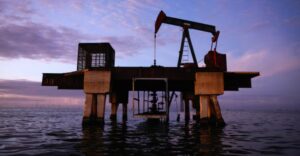
At the risk of imputing actual strategy and planning to the Trump regime, the US government’s focus on Venezuela hinges on two factors: the country’s oil wealth and the administration’s (literal) “gunboat diplomacy”. The first of these is a constant. Venezuela has, by some estimates, the world’s largest oil reserves. It is therefore a strategic prize for a Trump team that appears to want to remake the U.S. into the world’s largest petrostate.
The second is the Trump administration’s throwback to the days when the U.S. treated the Caribbean as a U.S. lake, and the Western hemisphere as its “backyard.” Whether or not the U.S. will really execute a war against Venezuela, its show of force in the Caribbean sends a message that the U.S. is asserting its power in the region in more unilateralist and militarist ways. It’s not clear if this amounts to a “pivot” to Latin America away from Asia or the Middle East, but it’s in line with Trumpian bluster about ejecting Chinese corporations from the Panama Canal Zone or taking over Greenland.
Trump’s recent intervention to prop up his far-right ally Milei in the Argentinian election, his pardoning of Hernández, his endorsement of El Salvador’s Bukele, and the intervention in Venezuela reinforce the U.S. effort to assert its regional hegemony among an emerging group of conservative and far-right governments in the region. Latin America’s “pink tide” has, for now, washed away.
What do socialists have to say about the administration’s threats against Venezuela? Our starting point is opposition to U.S. intervention in whatever form—from sanctions to war. The U.S. has no right to determine the Venezuelan people’s future. Only Venezuelans can do that.
We don’t take this position because we think that the Venezuelan government is socialist. Far from it. Despite its leaders’ anti-imperialist rhetoric, Venezuela remains a capitalist economy that a corrupt and increasingly repressive state rules over.
In the early 2000s, the government under President Hugo Chávez used the country’s booming oil wealth to expand health, welfare and education programs. Chávez called this “21st century socialism.” It attained impressive gains. But these began to run aground in the mid-2010s as the world price of oil collapsed. These economic strains led the right-wing anti-Chávez opposition to grow. Chávez death from cancer in 2013 opened the way for Maduro, a less charismatic and more authoritarian figure, to take over the Bolivarian state.
In the “good times” of high oil prices, inflation and widespread government and private-sector corruption were a consequence. Because of this, many citizens’ interactions with the government are frustrating, and basic public services are never delivered. Before he died, Chávez himself called attention to problems of inefficiency in the government bureaucracy.
Added to other social problems, such as high rates of crime, the economic situation presented plenty of issues the right could exploit, especially as it sought to attract sections of the middle class that had formerly voted for Chávez. The Maduro government turned increasingly to repression to hold off these challenges. And it repressed not only the pro-US right, but also working-class organization and the anti-capitalist left.
In the face of the U.S. assault and authoritarianism at home, the Venezuelan revolutionary socialist organization Marea Socialista declared in August:
Latin America and the Caribbean, in solidarity with the peoples of the world, must reject U.S. military harassment . . . of Venezuela or threats to any other country, without supporting the Maduro government.
[We call for] international solidarity with the Venezuelan people, against the U.S. military siege and the pro-U.S. intervention [Venezuelan] right!

Lance Selfa
Lance Selfa is the author of The Democrats: A Critical History (Haymarket, 2012) and editor of U.S. Politics in an Age of Uncertainty: Essays on a New Reality (Haymarket, 2017).